| |
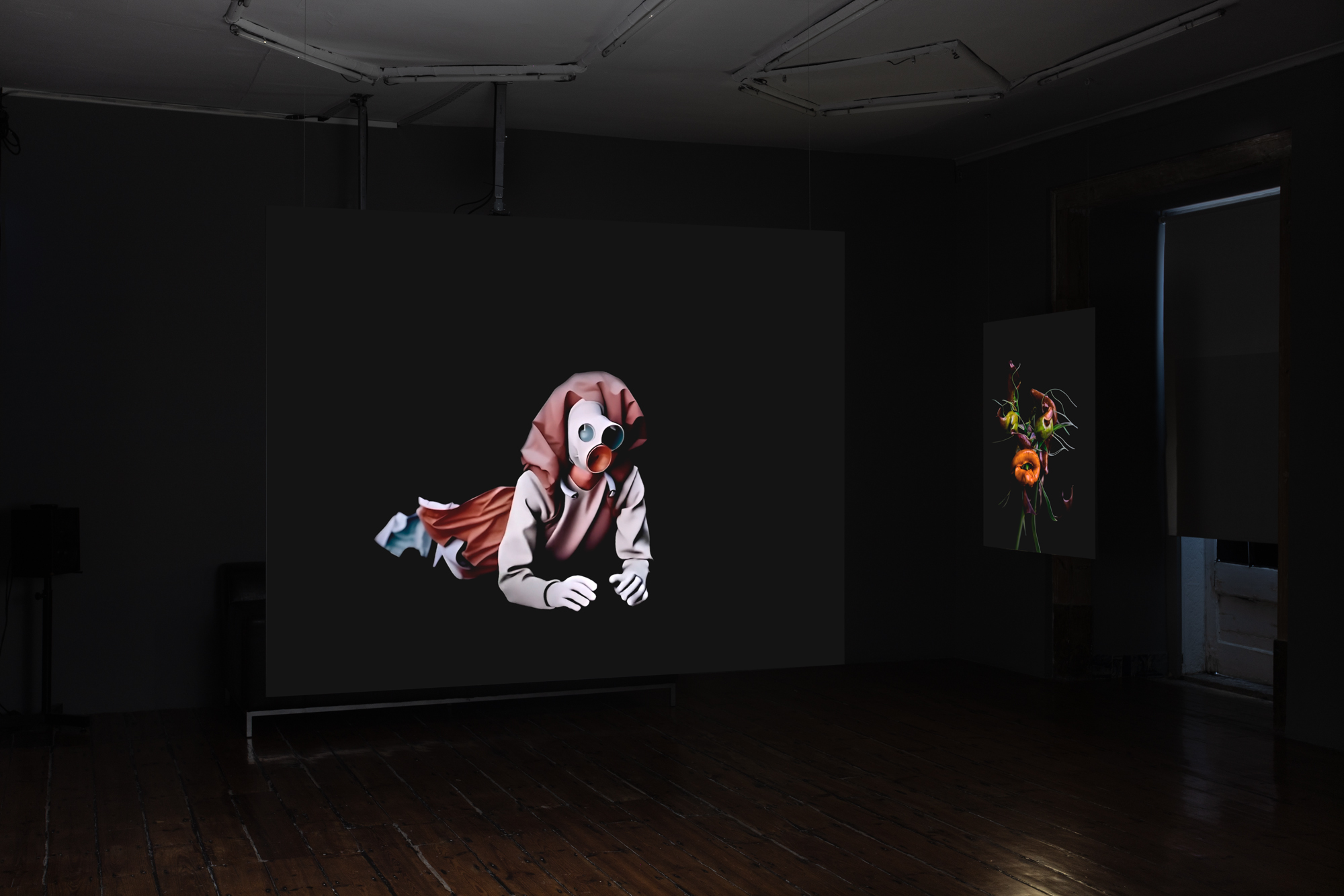 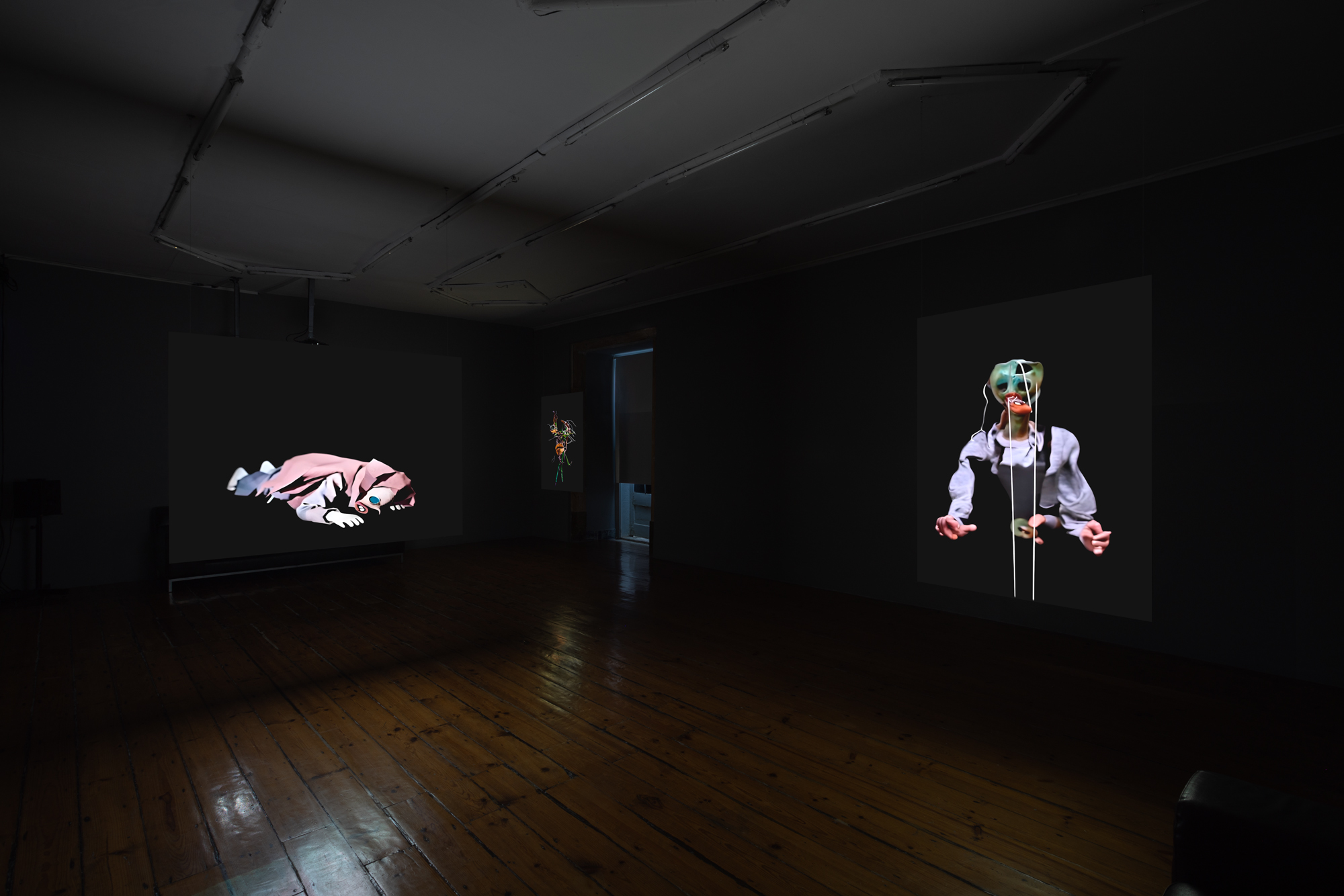   O Inominável, 2025 UHD video, colour, sound, 6’10’’, loop Variable dimensions Sound: conversion of the song Sinfonia (III In ruhig fliessender Bewegung) (1969), by Luciano Berio, through AI software; with additional excerpts from: Aria (1958), by John Cage; On Birds I (2008), by Olivier Messiaen; Drama in the Futurist’s Cabaret No. 13 (1913-14), by Vladimir Kasyanov; On DaDa! (1916), by Hugo Ball, Kurt Schwitters, Tristan Tzara; More Than This (1982), by Roxy Music; Words (1982), by F. R. David; What a Wonderful World (1967), by Louis Armstrong; Poème électronique (1958), by Edgard Varèse
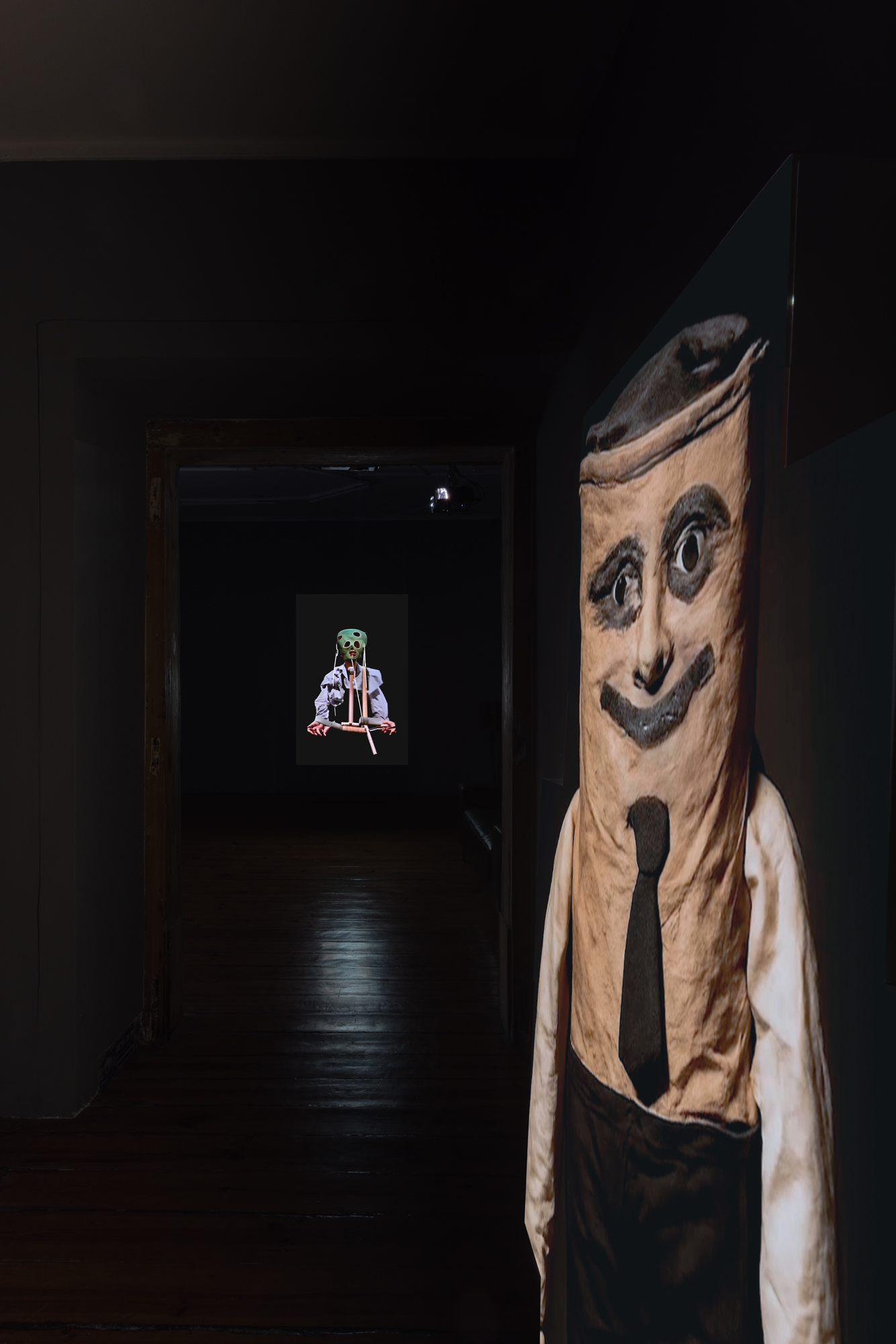
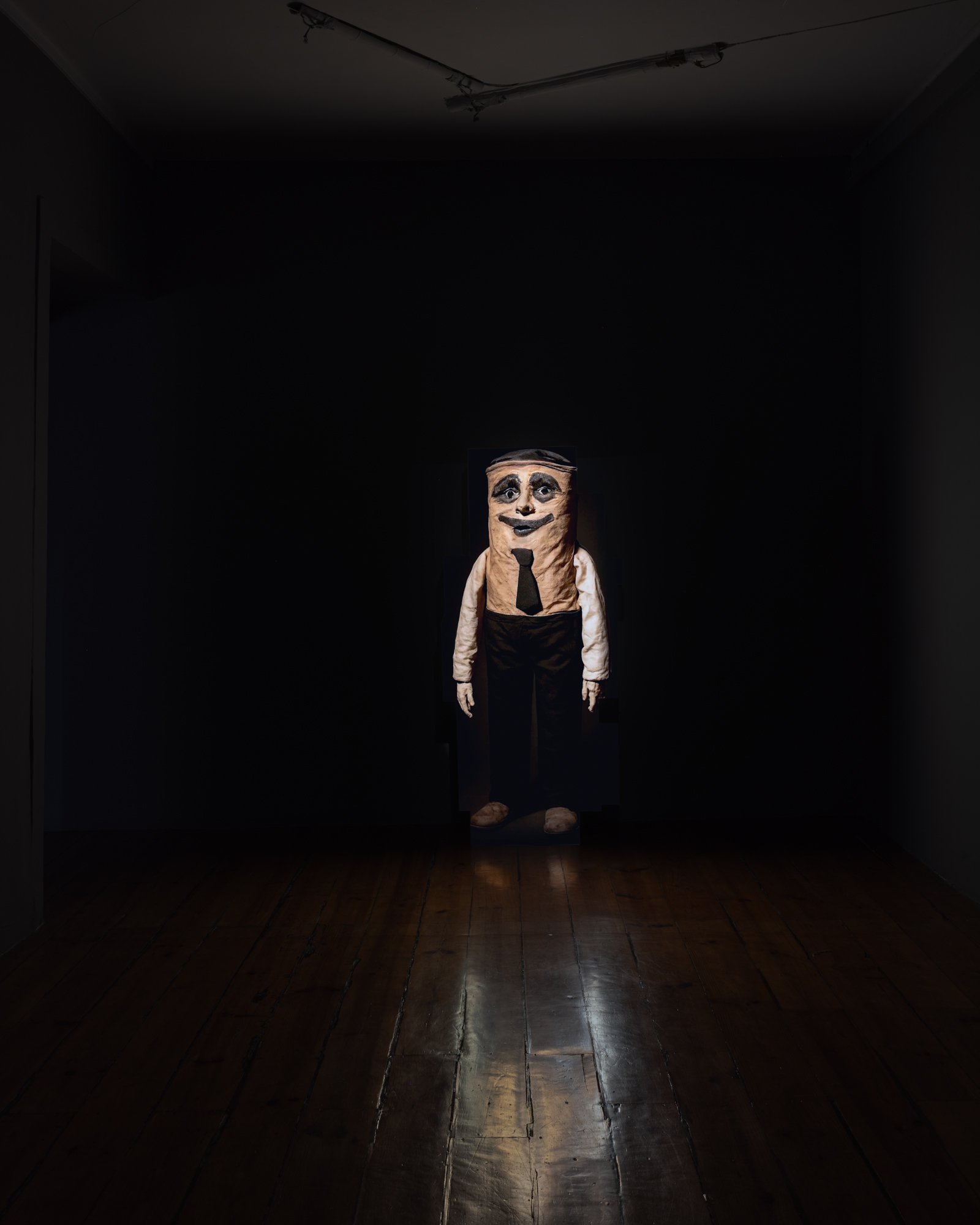
No Control, 2025 UHD video, colour, sound, 3’05’’, loop Variable dimensions Sound: conversion of the song No Control (1995), by David Bowie, through AI software
Views from the show O Inominável, curated by Natxo Checa at Galeria Zé dos Bois (from Nov. 2025 - Feb. 2026)
Organisation and Production: Galeria Zé dos Bois
All photos © Vasco Vilhena (…) A figure reminiscent of something between a paper bag and a cigarette butt stages what we might consider the prologue to the exhibition — chanting the phrase ‘No control, I can’t believe I’ve no control’ from David Bowie’s song No Control (1995), it appears anguishedly resigned to its submission to this entropy. Translating words into sound, sound into noise, noise into image, the exhibition exposes the collapse of power structures that go hand in hand with the desire for control, while also recalling its implications within the spheres of knowledge, gender and identity, and the environment (Nature, in a ‘more-than-human’ consciousness). O Inominável (2025) is distributed among three main figures, archetypal of the three fields mentioned above, attuned to each other and vocalising the sounds-noises that remain from the reinterpretation mediated by contemporary technology that has failed in its promise of faithful restitution. In the approximately six minutes of duration, the loss of meaning of the sounds is accompanied by the process of image disruption, where the visual sequences take on the form of representative failures, once again produced by technological tools that aim to guarantee a future of transparency and precision. These sequences were subjected to multiple attempts at disruption (and control) by the technological process itself, but also by the creative process. Throughout this process, when the images obtained drifted towards expected forms under the command of AI, they were diverted with images of bacteria, cancer cells, film frames, etc. This deliberate confrontation illustrates the tension between the incompetence of the machine and human impotence in controlling the very destiny of the work by introducing new images to enhance new derivations and meanings. In this context, the software’s inability to restore the integrity of the sound tracks, as well as to maintain the visual fidelity of the images, was not considered an accident, but rather a symptom of an ecosystem where technical mediation amplifies the unspeakability originally proposed by Beckett and reiterated by Luciano Berio. And it is precisely in this failure, in this collision of forces, that the work finds its political echo: an attempt to mirror contemporary society plunged into a limbo where neither words, nor sound, nor images can stabilise meaning. (…)»
|